

On January 20, Sezer Seçkin successfully defended his doctoral thesis at the Faculty of Chemistry and Food Chemistry at TU Dresden.
In his PhD work entitled
“From Colloids to Complex Modes: Hybrid Nanofabrication of Gain–Loss Metasurfaces for Optical Applications,”
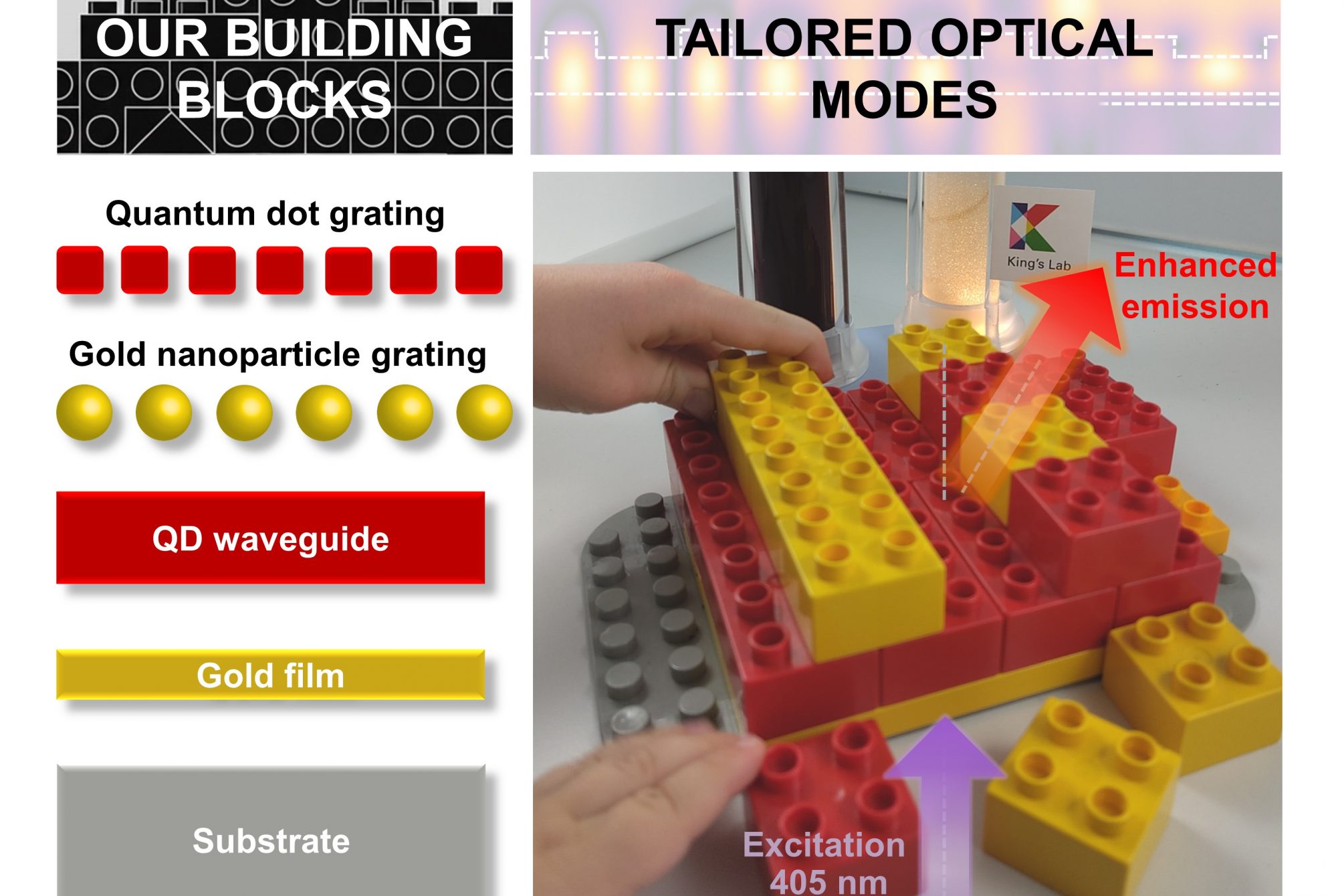
Sezer addressed a central challenge in modern nanophotonics: the scalable fabrication of complex photonic–plasmonic metasurfaces that combine optical gain and loss within a single, well-controlled architecture.
By introducing a hybrid fabrication strategy that merges Laser Interference Lithography with Template-Assisted Self-Assembly (LIL–TASA), his work bridges top-down nanofabrication precision with the scalability of bottom-up colloidal assembly. This approach enables the large-area organization of nanocrystals into well-defined one-dimensional grating structures and the controlled realization of advanced optical modes, including surface lattice resonances (SLR) and guided-mode resonances (GMR).
Through comprehensive optical spectroscopy, microscopy, and modeling, the thesis provides deep insight into nanoscale light–matter interactions and demonstrates clear relevance for applications such as refractometric sensing, surface-enhanced Raman scattering (SERS), and optoelectronic integration. Overall, this work establishes a robust and versatile platform for scalable gain–loss metasurfaces and opens new pathways toward reconfigurable nanophotonic devices. We warmly congratulate Sezer on this outstanding scientific achievement and wish him every success in his future academic and professional career.